
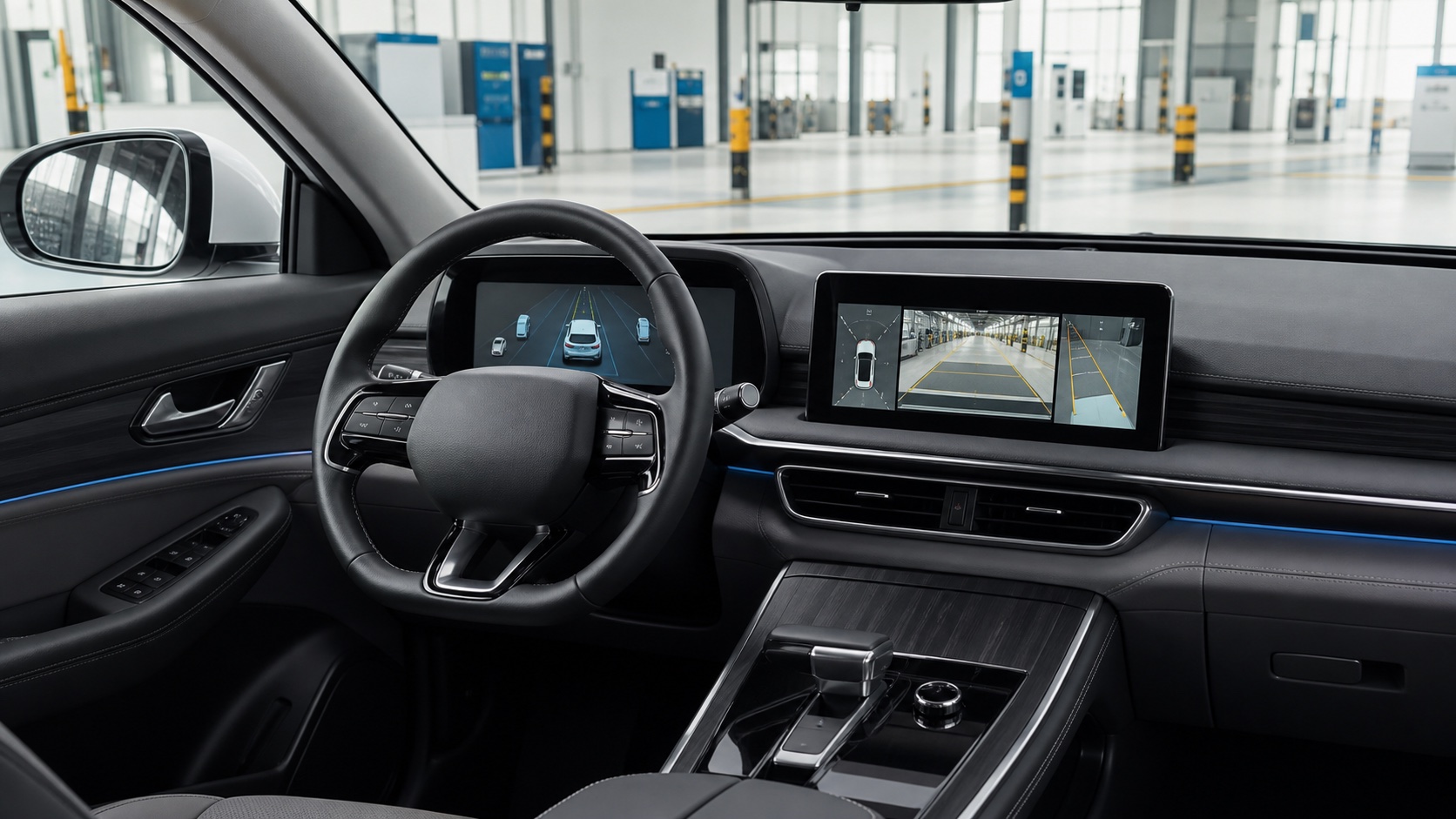
ADAS and comfort features should be compared by function, operating limits and exact trim rather than by marketing name. The same model can have different cameras, radars, parking functions, seat equipment, software languages and connected services across versions.
For sourcing and import approval, every feature should be tied to a build record, option list, physical check or controlled test. A brochure for the model family is not enough.
Does driver assistance mean automated driving?
Driver assistance does not automatically mean that the vehicle can drive without supervision. For Level 2 assistance, NHTSA describes the system as controlling steering and acceleration or braking at the same time while the driver remains fully engaged and responsible for monitoring.
Consumer-facing names such as highway pilot, navigation-assisted driving, NOA or lane centring do not define a universal automation level. Capability can change with software version, road type, map coverage, weather, camera visibility and destination-market regulation.
For procurement, treat the system as assistive unless the manufacturer documentation for the exact market states otherwise and the destination jurisdiction permits that operation. The owner’s manual should define driver-monitoring requirements, hands-on or eyes-on conditions, supported roads, speed limits and situations that require immediate takeover.
Which collision-warning and intervention features matter?
Forward collision warning, automatic emergency braking, lane support, blind-spot warning and electronic stability control address different risks. A vehicle should not be described as having a complete safety package because it includes only one of them.
| Feature | Primary function | What to verify |
|---|---|---|
| Forward collision warning | Warns the driver of a possible frontal collision. | Detection targets, warning settings, operating speed and whether the system is warning-only |
| Automatic emergency braking (AEB) | Applies braking when the system identifies an imminent collision. | Vehicle, pedestrian or cyclist detection; speed range; day/night limits; test protocol and trim availability |
| Electronic stability control | Uses selective braking and power intervention to help the driver maintain the intended path. | Warning-light self-check, diagnostic faults and destination compliance |
| Lane departure warning | Warns when the vehicle approaches or crosses a detected lane marking. | Warning method, minimum speed and lane-marking requirements |
| Lane keeping assistance | Adds steering input to help prevent lane departure. | Intervention strength, driver override, supported roads and deactivation conditions |
| Lane centring assistance | Provides continuing steering support to stay near the centre of a detected lane. | Whether adaptive cruise must be active, driver monitoring and curve limits |
| Blind-spot warning or intervention | Warns of a vehicle in the side blind area; some systems can add steering or braking intervention. | Warning-only versus intervention, trailer limitations and detection zone |
AEB can reduce collision risk or severity in supported conditions, but no AEB system should be described as guaranteed to stop the vehicle. Dirt, glare, darkness, weather, unusual road users, speed differences and sensor obstruction can affect detection.
Which driving and parking features improve daily use?
Adaptive cruise control, navigation-assisted driving, parking cameras and automatic parking can reduce workload when their operating conditions match the route. They still require driver supervision and an understanding of system limits.
- Adaptive cruise control (ACC): adjusts speed to maintain a selected distance from a detected vehicle ahead. Confirm stop-and-go capability, restart behaviour and the speed range.
- Navigation-assisted driving: may combine ACC, lane centring, assisted lane changes and route guidance. Confirm supported roads, map dependency, subscription status and destination availability.
- Automatic parking: can control steering and, on some systems, speed and braking. Check supported parking-space types, obstacle detection and whether remote parking requires a regional mobile app.
- 360-degree camera: combines several camera views to help with low-speed manoeuvring. A stitched image or so-called transparent chassis view can contain blind areas, delay or distortion and is not a real view through the vehicle floor.
- Rear cross-traffic warning and door-opening warning: can alert the occupants to traffic approaching from the side. Detection range and intervention differ by model.
For imported vehicles, camera calibration and replacement support matter. A windshield, bumper or mirror repair can affect sensor alignment, and qualified calibration may not be available in every destination market.
Which comfort features provide the most practical value?
Comfort features provide value when they match climate, passenger use and driving time. Buyers should prioritize functions that will be used regularly and verify which seats receive them.
| Feature | Useful when | Configuration checks |
|---|---|---|
| Seat heating and ventilation | Vehicles operate in cold or hot climates for long periods | Front or rear seats, cushion and backrest coverage, number of levels and remote activation |
| Automatic climate control | Cabin temperature must remain stable without frequent manual changes | Single, dual or multi-zone control; rear controls; heat-pump or PTC heating on EVs |
| Keyless entry and start | Frequent urban use or fleet-driver handover | Which doors unlock, digital-key region support, spare keys and security settings |
| Electronic parking brake and auto hold | Stop-start traffic and hill starts | Auto-release behaviour, driver prerequisites and fault status |
| Head-up display or AR-HUD | Drivers need speed and navigation information near the forward view | Language, brightness, navigation source, polarized-glasses visibility and right/left-hand-drive suitability |
| Power tailgate | SUV or MPV users frequently load cargo | Hands-free sensor, opening height, obstacle detection and manual override |
Climate-specific priorities can differ. Seat heating may matter in northern markets, while seat ventilation and strong air-conditioning performance may matter more in hot and humid regions. The purchase specification should name each required function instead of using a broad phrase such as “full options.”
Which features are optional rather than automatic priorities?
Panoramic roofs, massage seats, refrigerators, rear screens, ambient lighting and soft-close doors can be useful, but their value depends on the duty cycle. These features should not displace safety, serviceability or exact-configuration checks.
- Panoramic roof: adds light and a sense of space but also adds glass area, heat load, seals and drainage points. Inspect operation, shade, drains and glass condition.
- Zero-gravity or massage seats: can improve long-distance passenger comfort. Verify which seating positions support the function and whether use is restricted while moving.
- Vehicle refrigerator: check actual volume, temperature range, energy use, shutdown protection and operation when the vehicle is parked.
- Rear entertainment screens: check language, app region, connectivity, headphone support and content restrictions.
- Ambient lighting: confirm brightness control and whether reflections distract the driver at night.
- Soft-close doors: add convenience but introduce powered latches and repair cost. A power tailgate is a separate feature.
A feature should not be dismissed as useless for every buyer. The correct question is whether it solves a recurring need and whether the destination market can support it.
Why can the same model have different ADAS and software?
The same model name can cover different sensor suites, processors, option packages and software permissions. A later software version cannot always add a feature if the required camera, radar, ultrasonic sensor, driver-monitoring camera or control unit is absent.
China-market connected features may depend on a Chinese mobile number, local identity verification, a regional app, embedded SIM, map licence or paid subscription. Voice control and interface language may remain Chinese even when the menu offers English. Radio frequencies, emergency calling and online services may also differ from the destination market.
Confirm hardware and software separately. Record sensor locations, ECU or platform version, option code, current software version, feature activation status, account ownership, subscription end date and known regional restrictions.
What should be verified before approving the exact trim?
A feature checklist should be attached to the quotation and verified on the physical vehicle. Use the following sequence before final acceptance:
- Confirm VIN, trim code, production date, wheel size, interior package and paid options.
- Match the build information to the required airbags, stability control, AEB, blind-spot system, lane support, ACC, cameras and parking functions.
- Start the vehicle and check warning lights, diagnostic trouble codes and sensor-obstruction messages.
- Test cameras, parking sensors, seat functions, climate zones, keys, tailgate, head-up display and infotainment.
- Test driver-assistance only in controlled, legal and manufacturer-supported conditions. Do not create collision risk to demonstrate AEB.
- Confirm manual language, interface language, navigation, app binding, connected services, subscriptions and update path.
- Record the checks with photographs, screen captures and a signed or traceable inspection report.
The vehicle inspection service covers agreed checks on a specific vehicle, including equipment verification. The vehicle buying process explains requirement confirmation, supplier coordination, purchasing and export preparation. SauriVehicle can coordinate these China-side steps while the importer confirms destination-market approval and operation.