
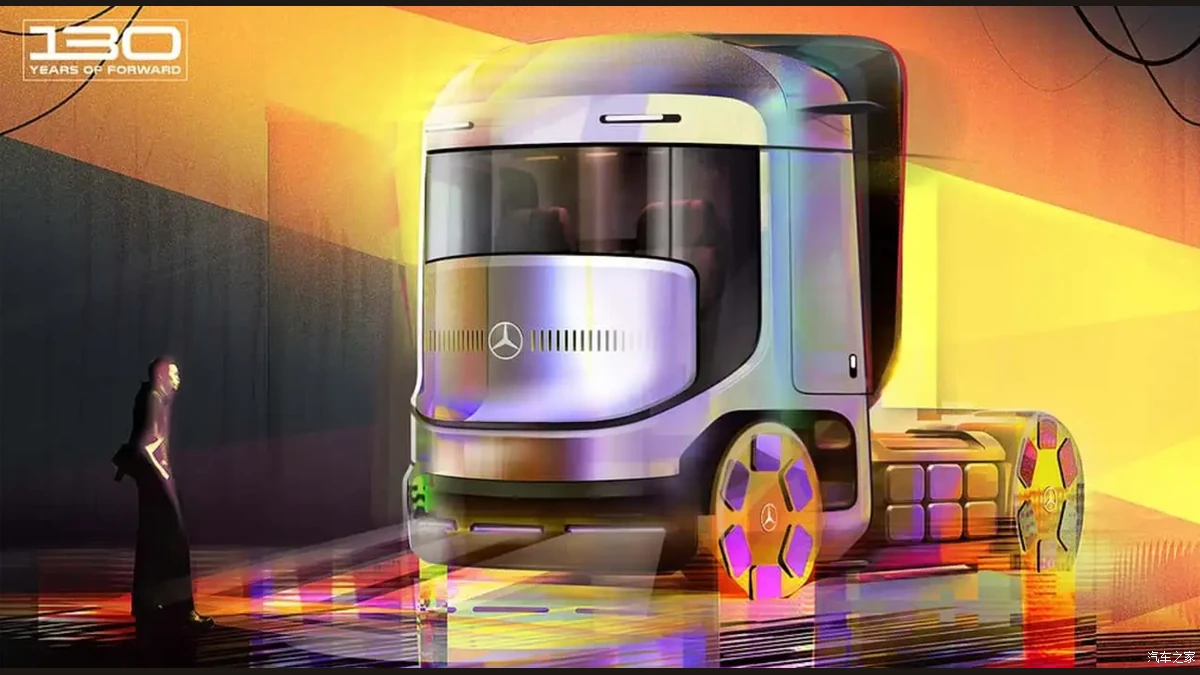
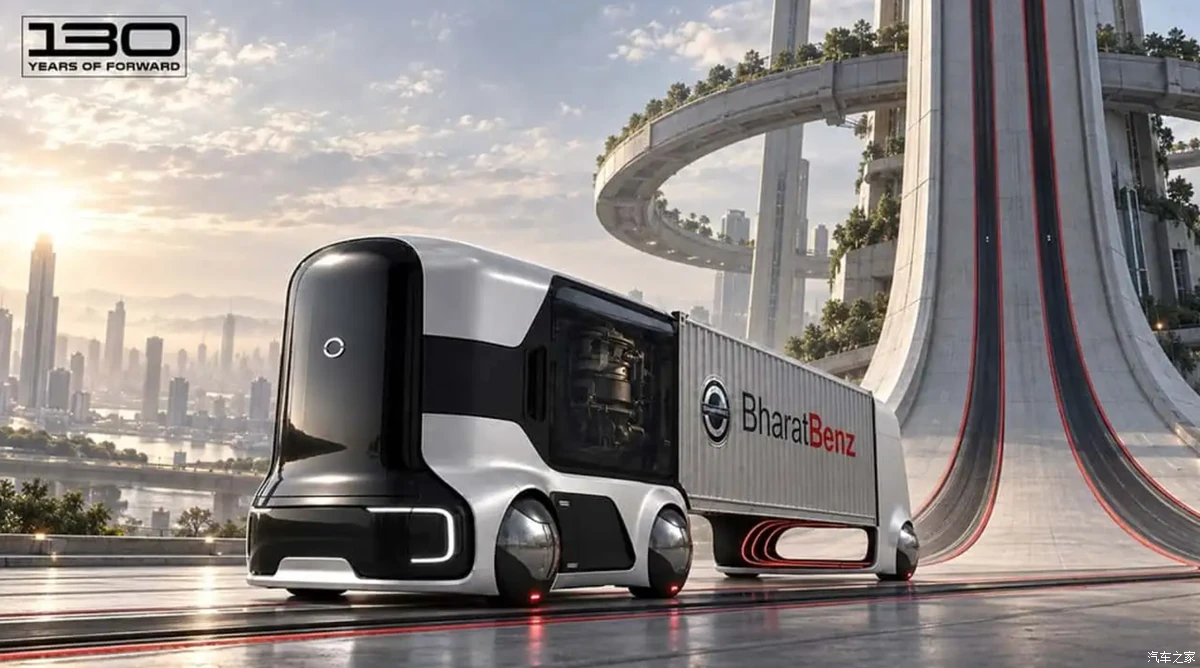
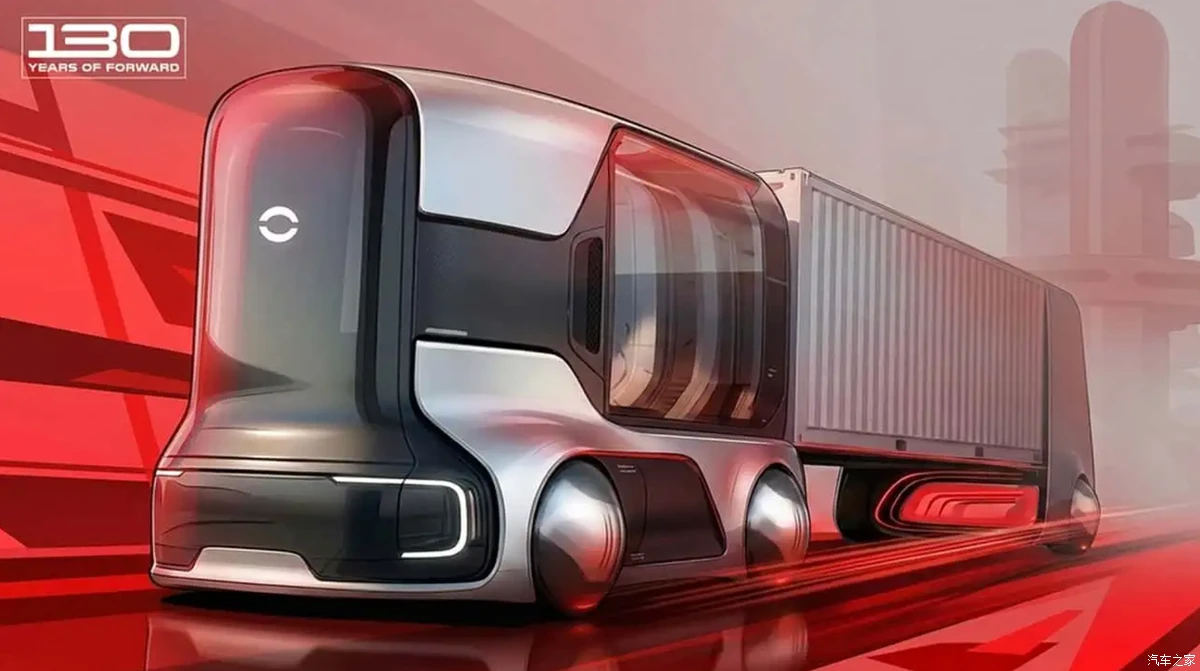
Daimler Truck has released a 2070 transport design study to mark 130 years since the truck’s invention. The non-production concepts imagine fully driverless long-haul vehicles, modular city cargo units and zero-emission streamlined bodies, while the company’s current roadmap continues with battery-electric trucks, hydrogen fuel-cell development and hub-to-hub automation.
What the 2070 design study shows
The Daimler Truck 2070 study is a design exercise rather than a production programme. Its three main ideas are:
- A cabless long-haul truck intended for fully driverless intercity operation
- A modular urban vehicle that can switch between cargo and passenger functions
- Highly streamlined vehicle bodies designed around zero-emission transport
Current electric and hydrogen roadmap
Daimler Truck is currently developing battery-electric and hydrogen fuel-cell trucks in parallel. The Mercedes-Benz eActros 600 is already in production, while the NextGenH2 fuel-cell truck remains under development.
| Programme | Current status | Source-stated milestone |
|---|---|---|
| Mercedes-Benz eActros 600 | In production for medium- and long-distance electric freight | Customer operations have exceeded 160 million cumulative km |
| NextGenH2 fuel-cell truck | Under development | Small-batch delivery planned by the end of 2026 |
Hub-to-hub L4 automation plan
Daimler Truck’s near-term automated-driving plan focuses on hub-to-hub freight instead of immediate driverless operation across every road type. The source describes three stages:
- A human driver completes the first mile from the origin to a highway transfer hub.
- An L4 automated truck handles the long-distance motorway section.
- A human driver completes the final delivery after the truck reaches the destination hub.
The company plans to introduce this L4 hub-to-hub truck operation commercially in the United States in 2027.