

China’s Ministry of Industry and Information Technology, together with three other departments, issued a draft notice on October 10 covering safety requirements for innovative vehicle design and development testing. The proposal would prohibit fully hidden door handles, restrict zero-gravity and rotating-seat functions while driving, and require at least 30,000 km of comprehensive reliability and durability testing.
Proposed testing and incident-record requirements
The draft requires newly submitted vehicle products to complete testing for comprehensive reliability and durability, structural reliability, software-function reliability, environmental adaptability, heating and cooling, protection performance and sealing.
- Environmental validation would last at least one year.
- The programme would follow a cold-high temperature-cold sequence described as two winters and one summer.
- Multiple test vehicles would have to cover the complete validation cycle and all key configurations.
- Comprehensive reliability and durability testing would cover at least 30,000 km.
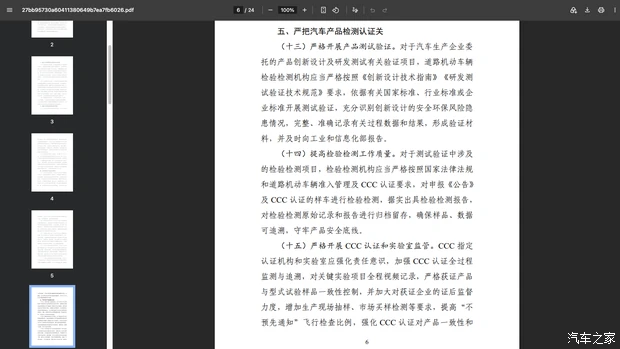
The proposal also asks manufacturers to investigate safety events or collisions involving abnormal operation of innovative functions, identify risks and preserve complete and accurate key data. Manufacturers would also have to provide data and technical assistance when public-security authorities investigate traffic accidents.
Physical controls and door-handle requirements
The proposed guidance says emergency escape devices, emergency braking controls and drive-system power-cut devices should use physical controls with clear markings. Safety-risk assessments would have to begin during product development and cover failure modes in complex conditions and extreme scenarios.
Vehicle designs using innovative door handles would have to demonstrate stable operation in extreme environments and usability during emergencies. The draft requires mechanical redundancy and sufficient hand space, and would prohibit fully hidden door handles.

Seat, roof and display restrictions
The draft lists operating restrictions and validation requirements for several cabin and body functions:
- Zero-gravity seats, rotating seats and seats folded into beds could not be used while the vehicle is moving.
- Pop-up roof structures would require anti-pinch, crash-safety and wind-resistance validation, and the roof function could not be used while driving.
- Centre entertainment screens, large displays and complex head-up displays would require safety and extreme-environment reliability assessments; folding and flexible displays would not be permitted.

The document remains a draft for public comment, rather than a final rule.