
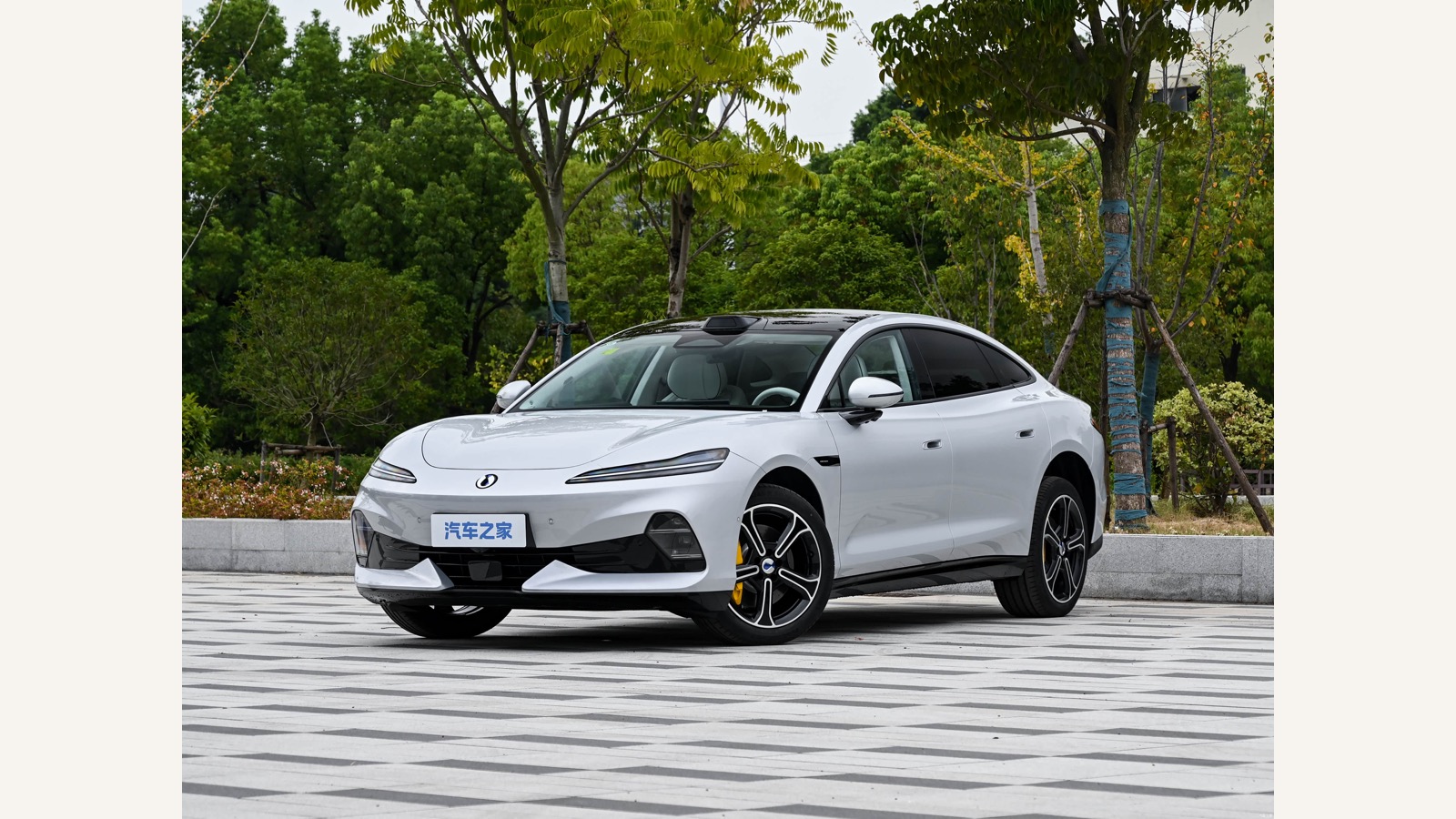
Denza launched the Z9S electric sedan in China on September 23, 2026. Three versions are priced from RMB 255,800 to RMB 325,800. Every version includes split rear-wheel steering, while the range covers single-motor rear-wheel-drive and tri-motor all-wheel-drive configurations with up to 1,100 km of CLTC range.
Three versions start at RMB 255,800
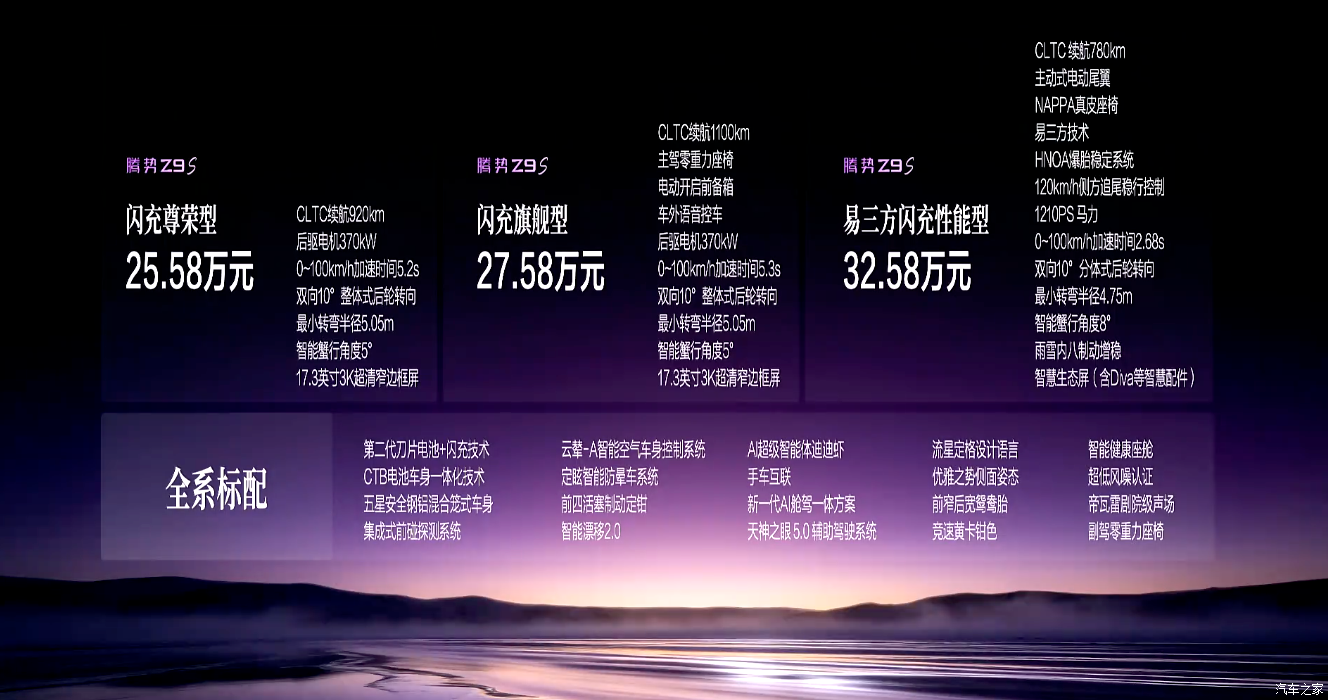
The Denza Z9S lineup includes two rear-wheel-drive versions and one Yi San Fang performance version. All three use a 102.326 kWh second-generation Blade battery.
| Version | Price | CLTC range | Drive output |
|---|---|---|---|
| Flash Charging Premium | RMB 255,800 | 920 km | 370 kW rear motor |
| Flash Charging Flagship | RMB 275,800 | 1,100 km | 370 kW rear motor |
| Yi San Fang Flash Charging Performance | RMB 325,800 | 780 km | 890 kW tri-motor AWD |
Body dimensions and cabin equipment
The Denza Z9S measures 5,090 mm long, 1,980 mm wide and 1,490 mm tall, with a 3,025 mm wheelbase. Exterior equipment includes split front lamps, concealed door handles, an active rear spoiler and a roof-mounted lidar unit. Storage comprises a 120-litre front compartment, 44 cabin storage spaces and a 470-litre expandable rear luggage area.
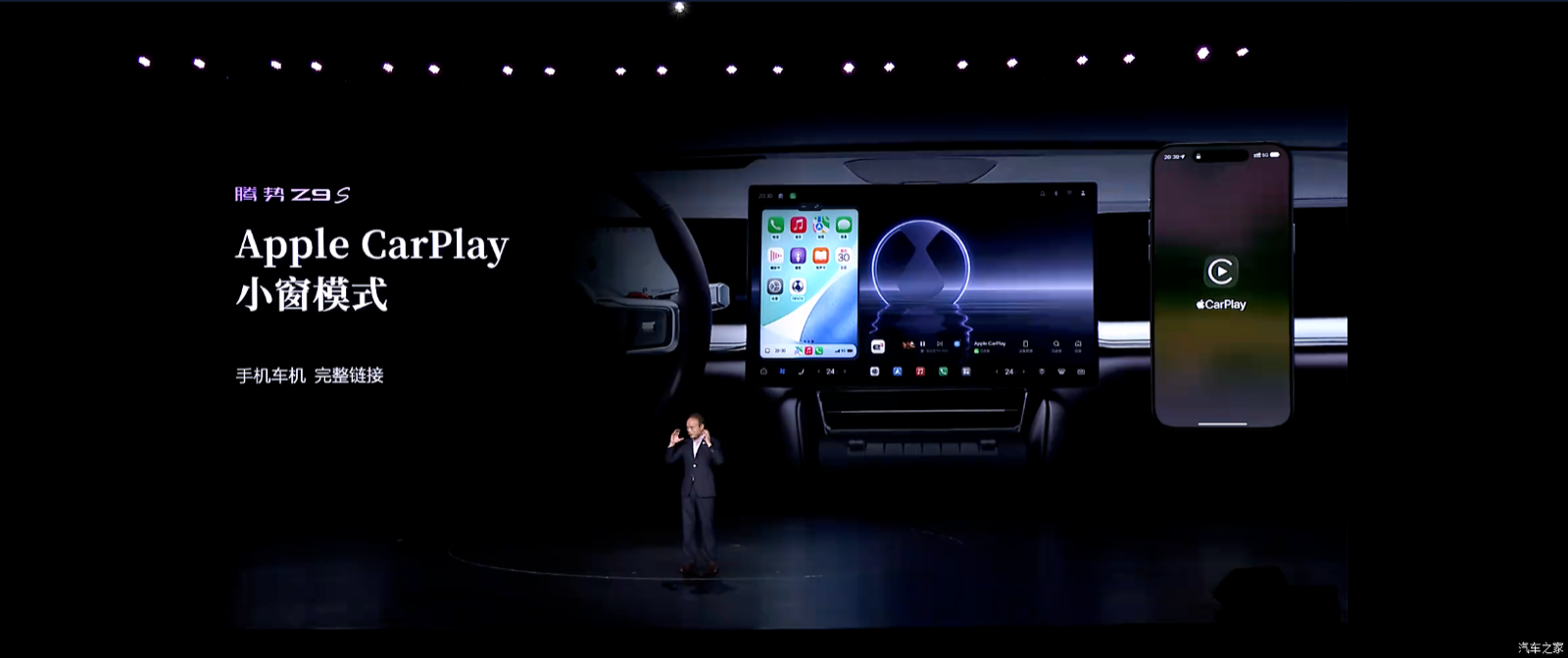
The Denza Z9S cabin has a 17.3-inch centre screen, 13.2-inch instrument display and 50-inch head-up display. Other source-stated equipment includes Nappa leather seats, a suede headliner, 128-colour ambient lighting, 50 W front wireless charging and a seven-inch rear armrest control screen.
Rear-wheel steering and lidar assistance
The Denza Z9S uses Denza’s Yi San Fang chassis technology and includes split rear-wheel steering across the range. The rear wheels can steer by up to five degrees in either direction, while the performance version has a stated minimum turning radius of 4.75 metres. The same version can accelerate from zero to 100 km/h in 2.68 seconds.
| Specification | Source-stated value |
|---|---|
| Battery | 102.326 kWh second-generation Blade battery |
| Rear-wheel-drive motor | 370 kW |
| Tri-motor combined output | 890 kW |
| Fastest 0–100 km/h time | 2.68 seconds |
| Maximum rear steering angle | Five degrees in either direction |
| Minimum turning radius | 4.75 metres on the performance version |
The roof-mounted lidar works with the DiPilot 5.0 driver-assistance system. The functions listed by the source include:
- Urban navigation assistance and highway navigation assistance.
- Automatic emergency steering and emergency steering assistance.
- Automatic emergency braking and accelerator-misapplication prevention.
The Denza Z9S also uses CTB battery-body integration, a steel-and-aluminium body and DiSus-A intelligent air-body control on the relevant configuration.