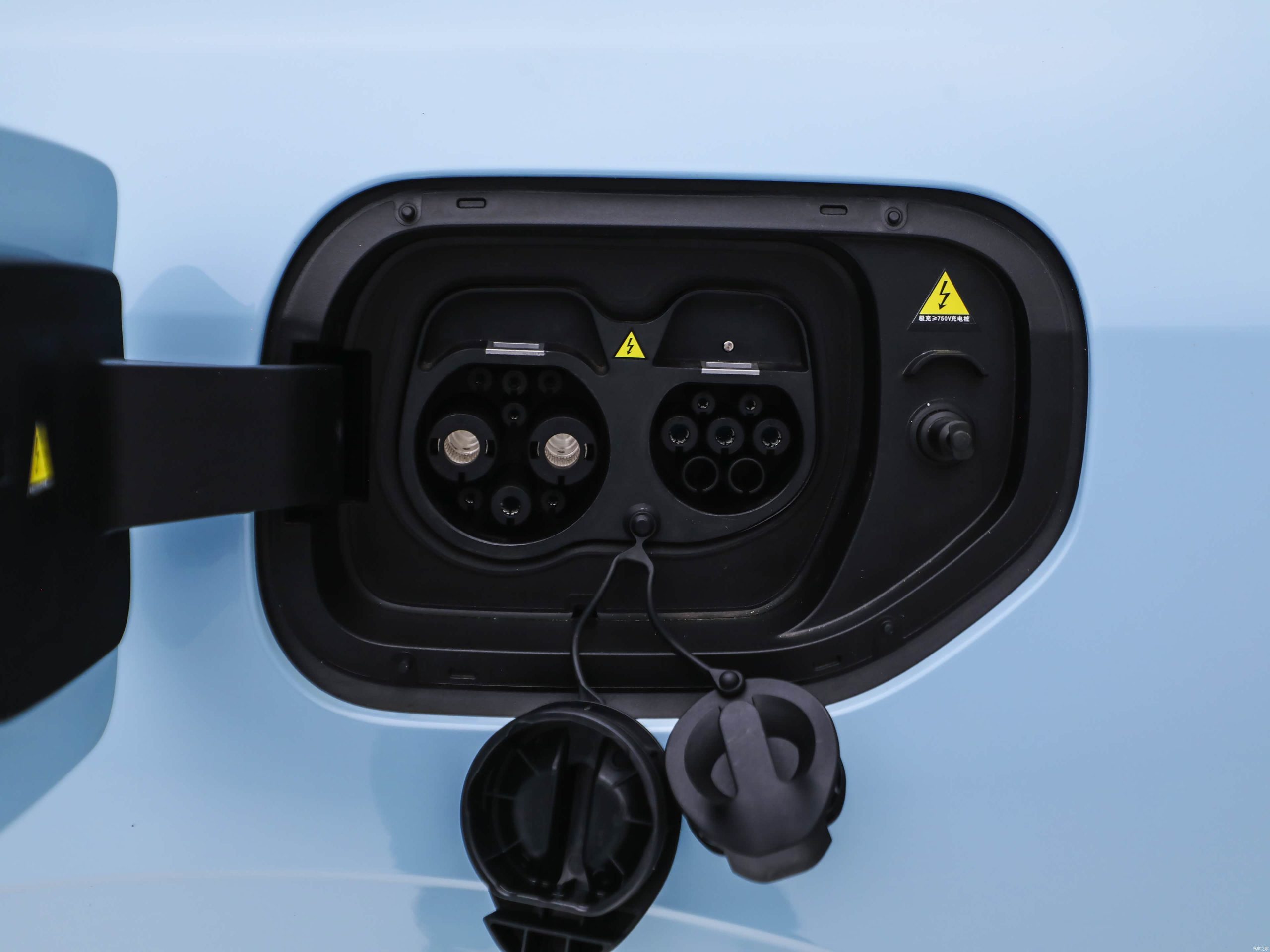
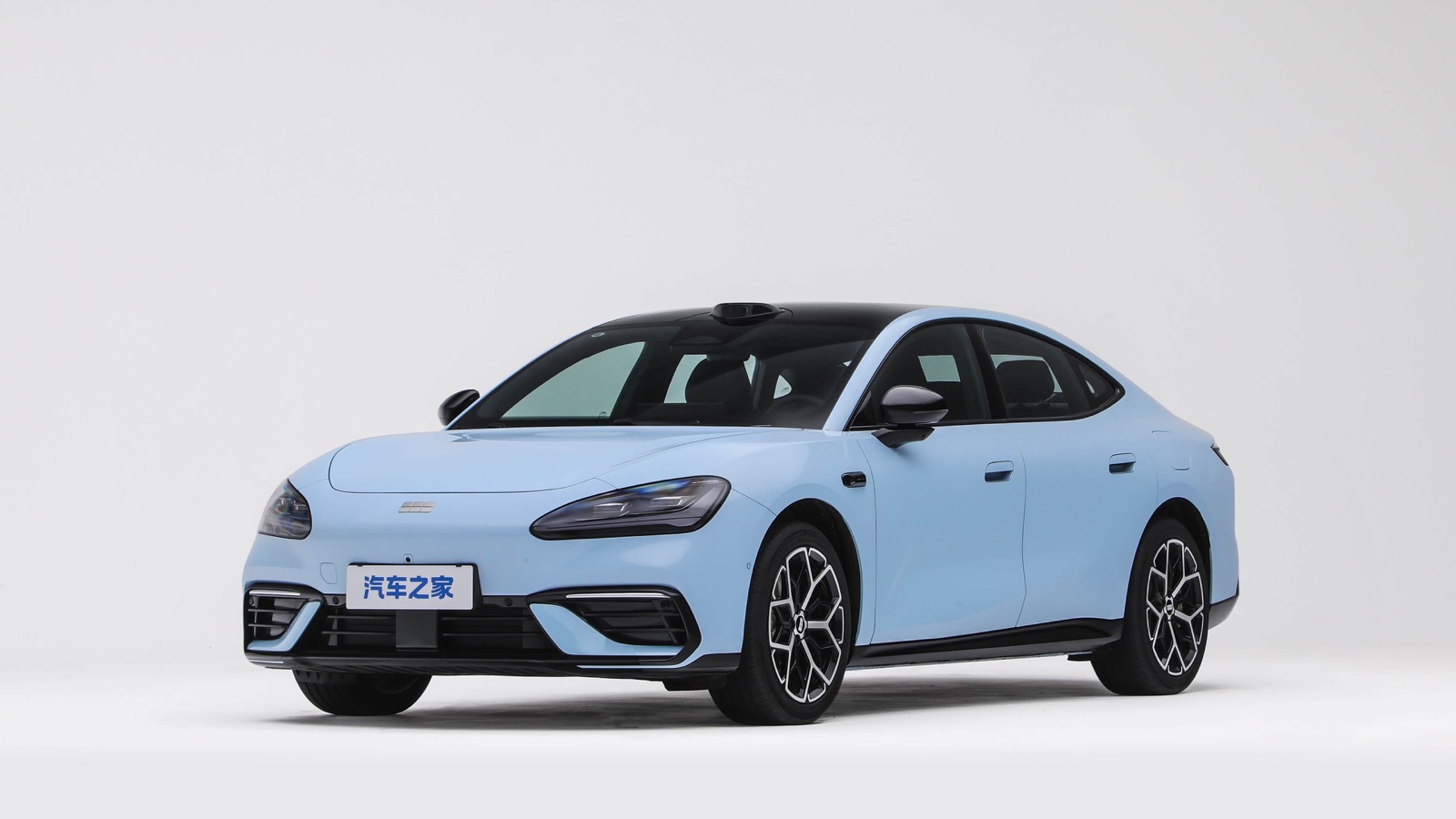
The Geely Galaxy TT launched in China on September 10 with five variants and promotional prices from RMB 129,900 to RMB 185,900. The mid-to-large electric fastback uses an 800V platform, offers up to 725 km of CLTC range and adds an Ultra dual-motor version with a claimed 0–100 km/h time of 3.8 seconds.
How much does the Geely Galaxy TT cost?
The Geely Galaxy TT is offered in five versions at launch. The promotional prices shown by the manufacturer are listed below.
| Version | Promotional launch price |
|---|---|
| 640 RWD Zunxiang | RMB 129,900 |
| 640 RWD Zungui | RMB 139,900 |
| 640 RWD Flagship | RMB 149,900 |
| 725 RWD Flagship | RMB 159,900 |
| Ultra | RMB 185,900 |
What are the exterior and storage details?
The Geely Galaxy TT measures 4,999 mm long, 1,919 mm wide and 1,479 mm tall, with a 2,920 mm wheelbase. Its low front end has sculpted bonnet lines, floating diamond-style headlamps, a three-section lower intake and an AGS active grille. Three wheel designs are offered in 18- and 19-inch sizes.
The fastback rear uses a light assembly with 108 LED elements. An active rear spoiler has three positions and can provide 508 N of downforce at its maximum 22.5-degree angle. Eight exterior colours are available:
- Qingwu Blue
- Olive Green
- Fjord Blue
- Moon Beige
- Cloud Mist Purple
- Rose Red
- Morning Mist Silver
- Night Grey
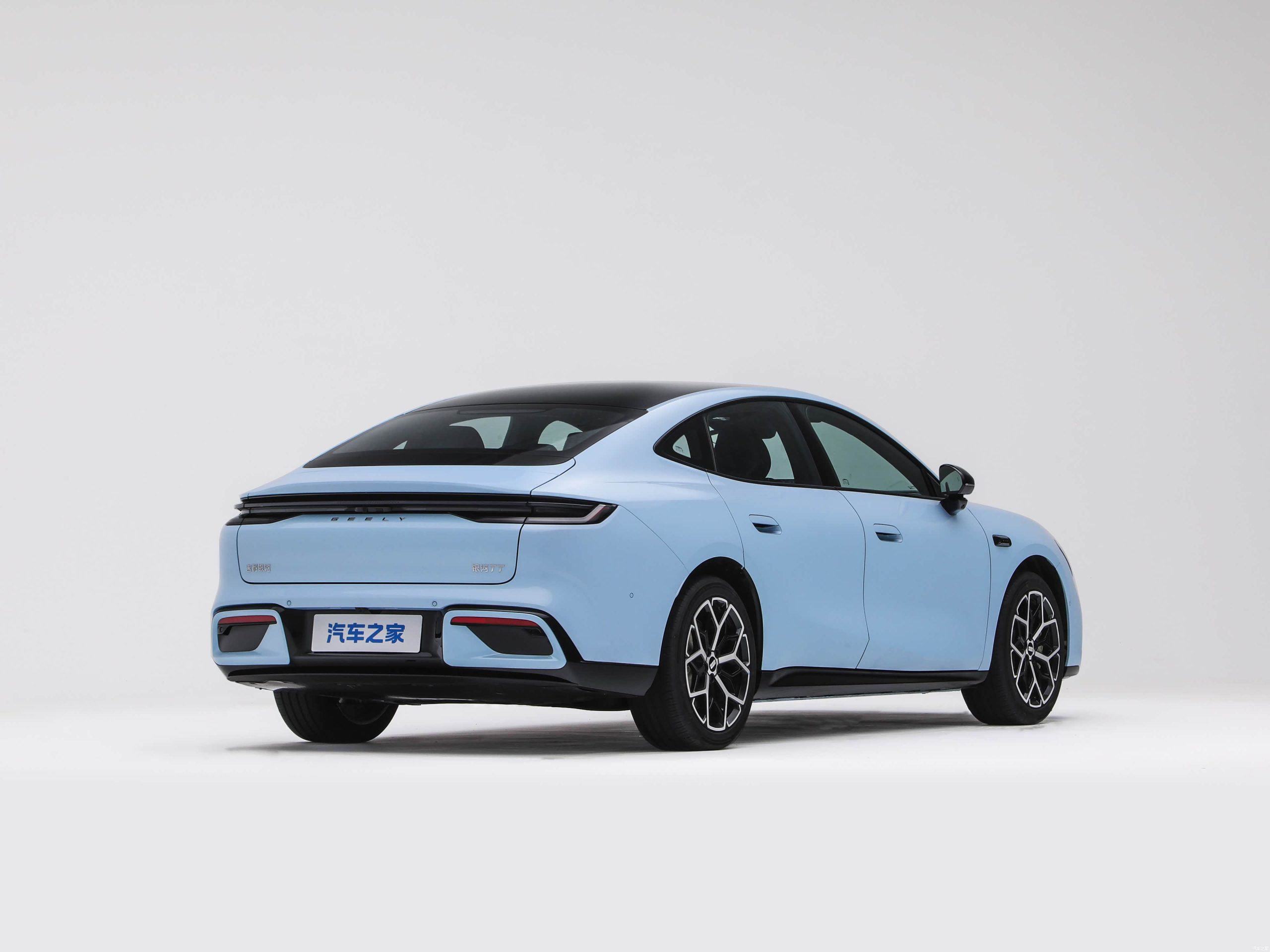
The front storage compartment holds 110 litres. The rear luggage area provides 475 litres above the floor and another 53 litres below it. Other storage includes a 12-litre front-passenger drawer, an 8.5-litre drawer beneath the rear seat and a 5.2-litre heating and cooling box, contributing to 37 storage locations across the vehicle.
What cabin and driver-assistance systems are fitted?
The Geely Galaxy TT cabin combines a 15.4-inch 2.5K central display, a 10.2-inch digital instrument panel and a 25.6-inch AR head-up display. It uses Flyme Auto 2, the Super Eva intelligent assistant and a 4 nm Longying 6P cabin processor. A 1.97-square-metre panoramic glass roof is also fitted.
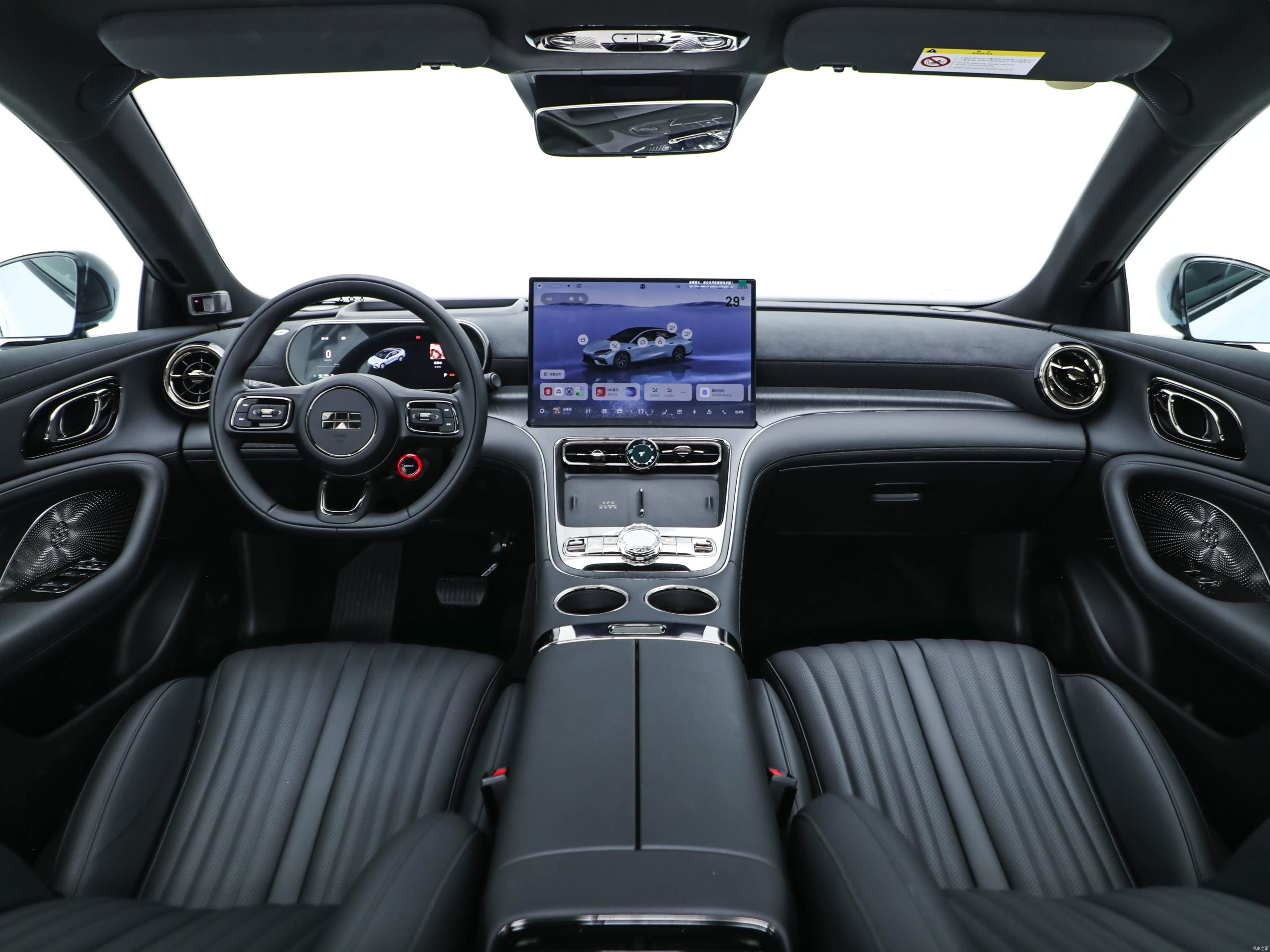
The audio system has 23 speakers and a total output of 2,000 W, with three speakers mounted above the dashboard. The cabin also provides three types of accessory connection:
- Multiple magnetic mounting points
- Two threaded charging ports
- One central ecosystem expansion interface
The front seats use a 14-point massage system with eight massage points in the backrest and six in the cushion. It provides three intensity levels and eight massage programmes. Up to seven airbags are fitted, including a far-side airbag between the front occupants.
The Geely Galaxy TT offers Qianli Haohan H5 and H7 driver-assistance configurations with different processors and lidar hardware.
| Hardware | H5 | H7 |
|---|---|---|
| Processor | Horizon Robotics J6M | NVIDIA Thor-U |
| Peak computing power | 128 TOPS | 700 TOPS |
| Cameras | 11 | 11 |
| Millimetre-wave radars | 3 | 3 high-performance units |
| Lidar | 1 × 192-line unit | 1 × RoboSense EMX MINI |
| Ultrasonic radars | 12 | 12 |
Supported functions include:
- City navigation-assisted driving
- Highway navigation-assisted driving
- Door-to-door parking-space navigation
- Automatic and remote parking
- Sentry mode
Which chassis and powertrain systems are used?
The Geely Galaxy TT uses an aluminium double-wishbone front suspension and a reinforced five-link independent rear suspension. It also offers FSD adaptive variable damping, hydraulic bushings and DP-EPS electric power steering. Higher variants can be specified with the Ultra CCD-AI Magic Carpet chassis.
A one-touch BOOST function temporarily raises motor output and wheel torque. Activating it starts a 20-second countdown on the centre display, accompanied by lighting and sound effects.
The Geely Galaxy TT uses an 800V high-voltage platform and supports 6C fast charging. The rear-drive versions have a 245 kW motor producing 320 N·m, while the Ultra uses dual-motor all-wheel drive.
| Powertrain | Motor output | Battery | CLTC range | 0–100 km/h |
|---|---|---|---|---|
| 640 RWD | 245 kW | Not stated | 640 km | 7.2 seconds |
| 725 RWD | 245 kW | Not stated | 725 km | 6.5 seconds |
| Ultra dual-motor AWD | 180 kW front + 245 kW rear | 75.2 kWh LFP | 650 km | 3.8 seconds |